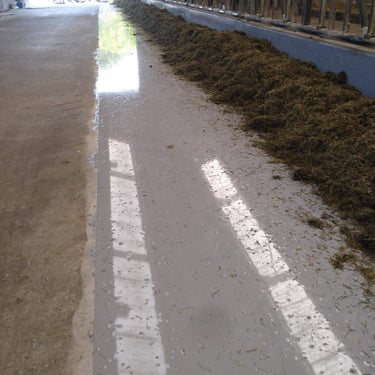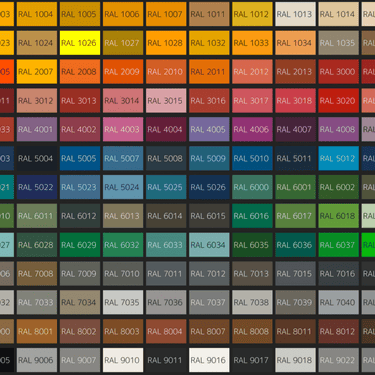
A 2-component agricultural floor coating from Farmcoat is an excellent choice for making a concrete floor durable, wear-resistant, mechanically resilient, and easy to clean. However, applying a coating is not just a matter of mixing and rolling it out. Proper preparation and correct application are essential for a smooth and long-lasting result. These are the 6 most common mistakes made when coating a concrete floor with epoxy.
1. Insufficient preparation of the concrete floor
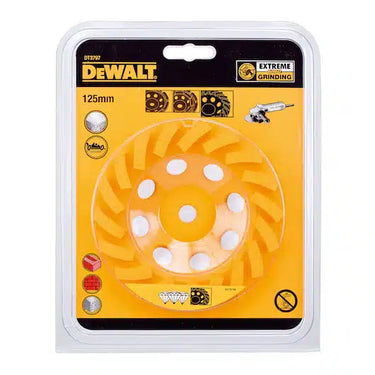
Good adhesion starts with a clean and sound substrate. Dust, grease, oil, loose cement/laitance, and loose parts must be completely removed. Sanding (or dust-free blasting) is often necessary to make the concrete floor suitable for a coating. Power-troweled floors are too smooth and must be opened up and roughened by sanding. Old, worn-out concrete floors often contain brittle sections on the surface. These must be sanded away for durable adhesion of the coating. Cracks, holes, and damage should also be repaired beforehand if desired. Proper preparation prevents problems such as peeling, blistering, and premature wear.
2. Moisture or insufficiently cured substrate.
Moisture is a major cause of problems with floor coatings. A concrete floor may look dry on the surface while there is still too much moisture in the substrate, or moisture may rise later due to weather conditions and/or high water tables. This can lead to blisters, discoloration, or detachment of the coating. Always check whether the floor meets the moisture and application requirements of the coating.
A newly poured concrete floor must cure for at least 30 days before a coating can be applied to it. Within those 30 days, not only is the moisture content too high, but so is the pH of the concrete. After 30 days, a concrete floor is sufficiently cured for a coating to adhere and harden properly.
3. Incorrect mixing of the epoxy
With a 2-component coating, resin and hardener are mixed in a prescribed ratio. An incorrect mixing ratio or insufficient mixing can prevent the epoxy from hardening properly. Therefore, always mix accurately according to Farmcoat's instructions and use suitable mixing tools. Also, pay attention to the application time: after mixing, the epoxy begins to harden slowly. If you leave it in the can too long, its shelf life is limited and it can even get hot. This is called the Pot Life. How long it remains workable out of the pot.
4. Application under the wrong conditions
Temperature and humidity have a major influence on the final result. At too low a temperature, epoxy may harden slowly, while high temperatures can significantly shorten the application time. Never place coating cans in direct sunlight or warm storage. Condensation on the concrete floor must also be avoided. Therefore, always check the temperature and humidity before applying an epoxy coating.
5. Applying too thinly
If you apply an agricultural coating too thinly or with insufficient coverage, it has a direct effect on the load-bearing capacity and wear resistance. A layer that is too thin wears through more quickly but is also less resistant to liquids or heavy loads. Therefore, apply generously and with good coverage.
6. Subjecting the floor to stress too soon
After application, an epoxy floor sometimes seems dry quickly, but full curing takes longer. Walking on the floor or subjecting it to heavy loads too soon can damage the result. Therefore, always adhere to the indicated drying and curing times. The right agricultural epoxy coating, combined with a clear manual, ensures a strong and durable concrete floor. View the products in our webshop via the menu.